Do you need a permit for Paddington wedding floral arches?
Posted on 10/10/2026
If you are planning a wedding in Paddington and thinking about a floral arch, the permit question tends to pop up very early - usually right after the excitement and before the spreadsheet gets a bit grim. Do you need a permit for Paddington wedding floral arches? Sometimes yes, sometimes no, and the answer depends on where the arch will sit, who owns the space, whether it affects access, and whether it's purely decorative or a more substantial structure.
That sounds annoyingly vague at first. Fair enough. But once you break it down, the process is actually manageable. In this guide, we'll walk through when permission is likely needed, how approvals usually work in London-style wedding settings, what to check with your venue or local authority, and how to avoid last-minute surprises that can turn a lovely plan into a headache. We'll also cover practical setup advice, common mistakes, and a simple checklist you can use before the big day.
Expert summary: A floral arch at a Paddington wedding may not need a formal permit if it is inside a private venue and does not affect public access, but if it is placed in a public or shared space, or installed in a way that changes access, safety, or structures, you should check permissions well in advance. The safest route is to confirm venue rules, location ownership, and any council or event requirements before you book the arch.
Why Do you need a permit for Paddington wedding floral arches? Matters
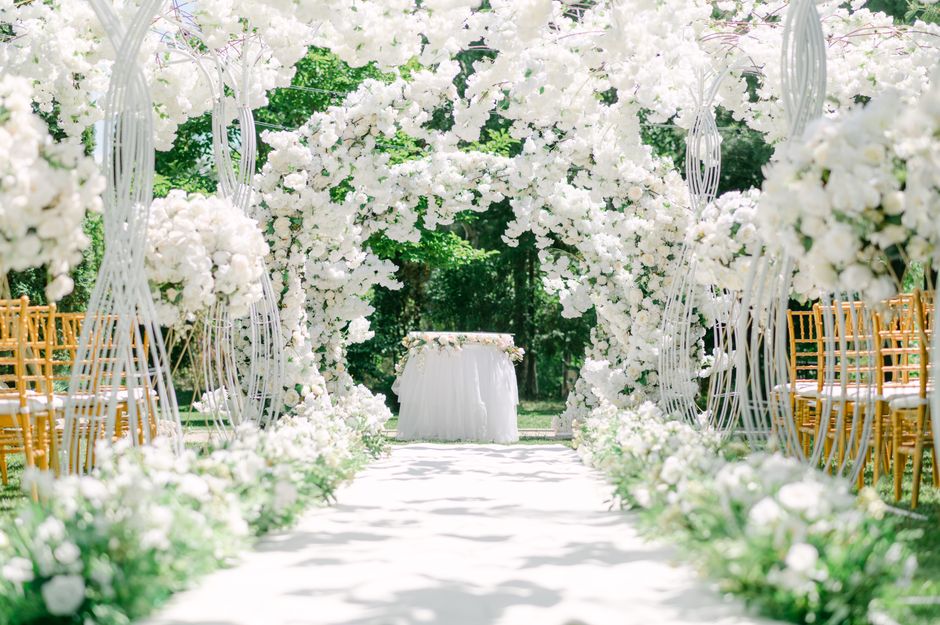
The short answer is that a floral arch is not just decor. It can be a structure, a route blocker, a fire-safety consideration, a planning issue, or simply a venue-approved styling piece depending on where it sits. In Paddington, that matters because weddings often take place in a mix of spaces: hotels, halls, private terraces, listed buildings, shared lobbies, and sometimes venues close to busy public areas. Each one has its own rules.
Let's face it, an arch looks harmless in photos. A cascade of roses and greenery, maybe a few ribbons moving in the breeze, very tasteful. But the moment you add a frame, weights, fixings, candles nearby, or an installation near entrances and walkways, the question changes from "Is it pretty?" to "Is it allowed?"
Permission matters for three big reasons:
- Safety: guests need clear exits, stable structures, and no trip hazards.
- Access: the arch should not block pedestrians, wheelchair users, staff movement, or emergency routes.
- Responsibility: someone has to approve the build, the placement, and the removal, especially if the space is not fully private.
There is also a reputational side. A wedding setup that looks effortless usually had a lot of quiet planning behind it. When the paperwork is in place, the day feels calmer. You notice the room, the scent of the flowers, the music starting, not the panic over whether a structure can stay where it is until the vows.
How Do you need a permit for Paddington wedding floral arches? Works
In practice, the process is usually about confirming whether the floral arch is classed as a temporary installation, a decorative item, or a structure that affects a site's normal use. For a private venue, the venue manager often has the final word. For anything touching public space, the answer may involve local authority rules, building management, or an events team.
Here is the simplest way to think about it: if the arch stays fully inside a private wedding venue and does not interfere with fire exits, access routes, or walls/flooring, then formal permission may be limited to venue approval. If it is outdoors, near a pavement, in a communal courtyard, or attached to a fixed surface, the approval chain becomes more serious.
In Paddington, that can mean checking a few different layers:
- Venue permission: always the first stop, even if the arch seems small.
- Building or site management: needed in hotels, shared lobbies, apartment-style venues, and managed spaces.
- Public space or council input: may apply if anything extends into public access areas or changes how people move through the location.
- Supplier assessment: a good florist will advise on weight, stability, and the best fixing method for the site.
One detail people miss: the arch may be fine in theory, but the delivery route may not be. Tight doors, narrow lifts, low ceilings, wet weather, or stone flooring can all affect setup. A florist who knows weddings will usually ask these questions early. If they don't, that's your clue to ask them yourself.
For wedding planning more broadly, it can help to look at the florist's wider service range and style options. A page like wedding flowers in Paddington can be useful when you are comparing floral styles, while wedding collections helps you see how arches fit within a fuller ceremony design.
Key Benefits and Practical Advantages
Getting permission sorted early is not glamorous, but it pays off. The benefits are practical, not theoretical. You save time, avoid stress, and reduce the chance of a same-day layout change when everyone is already dressed and the registrar or celebrant is waiting.
- Fewer surprises on the day: no awkward "sorry, this can't go there" moment.
- Smoother supplier setup: florists can plan fixing points, delivery timing, and staffing.
- Better design choices: if an arch has to be freestanding, the style can be adapted from the start.
- Lower risk of damage: approval usually includes checking walls, flooring, and fixtures.
- Cleaner guest flow: people move naturally through the ceremony space instead of squeezing around decor.
There is a quieter benefit too: confidence. Weddings run on emotion, and a tiny uncertainty can nag at you all day. When the floral arch is signed off properly, you get to enjoy it. That sounds basic, but on a busy wedding morning, basic is beautiful.
If you're still in the browsing stage, a local florist page such as your Paddington florist can be a helpful starting point for understanding what is possible in the area and what tends to work in real venues, not just on mood boards.
Who This Is For and When It Makes Sense
This question matters most for couples, planners, and venue teams arranging ceremony styling in shared or regulated spaces. It also matters if you are working with a florist who will deliver, install, and dismantle the arch on the day. In our experience, the people who need the clearest answers are the ones with the least time to chase them.
You should pay close attention if any of these apply:
- the arch will be in a hotel entrance, foyer, courtyard, terrace, or shared reception area;
- the ceremony is near public walkways or access routes;
- the arch needs to be fixed to a wall, floor, gate, or other permanent surface;
- the structure is large, heavy, or includes hanging decor;
- you are working with a listed building or a venue with strict preservation rules;
- the florist needs to deliver via lifts, loading bays, or timed access points;
- you want the arch to stand for many hours, or possibly across a reception and ceremony transition.
For smaller, private, freestanding arches, the process may be straightforward. But for elaborate ceremony styling, especially the kind that frames the aisle and becomes the backdrop for photos later, you really do want the rules confirmed. Nobody wants the officiant stepping around a base plate while trying to stay elegant. Bit awkward, that.
Step-by-Step Guidance
Here is a practical way to handle it without spiralling into a dozen half-finished email threads.
1. Identify the exact location
Start with the physical spot, not the general venue name. "The ballroom" is useful, but "the west entrance of the ballroom facing the courtyard" is better. Permission decisions often depend on where the arch sits by a few metres.
2. Ask who controls the space
Is it the venue, the building manager, a landlord, a council, or a third-party events team? This is the bit people assume will be obvious. It often isn't. One conversation early can save a week later.
3. Describe the arch clearly
Share the approximate height, width, style, materials, whether it is freestanding, and whether it will use weights or fixings. A floral arch with a light metal frame is treated differently from a large timber installation with draped flowers and fabric.
4. Check access, storage, and timing
Ask how the arch will arrive, where it will be staged, how long setup will take, and whether it must be removed the same day. A polished plan includes boring details like loading bays and lift times. Boring, yes. Necessary, absolutely.
5. Confirm safety and fire considerations
Make sure the arch does not block exits, alarms, or fire-fighting equipment. If there are candles, lanterns, or draping fabrics nearby, ask what is allowed and what isn't. This is one of those moments where caution is not overkill.
6. Get approval in writing
An email is usually enough for many venues, but the important thing is having a clear record. If a supplier, planner, or venue team changes later, you want the original approval visible and easy to find.
7. Build in a fallback plan
Sometimes the arch can't go where you hoped. Have a second position in mind, or ask the florist to design something modular. A clever plan B is a lot cheaper than a day-of redesign.
Expert Tips for Better Results
Good wedding floral design is a mix of taste, logistics, and calm decision-making. Here are the tips that tend to make the biggest difference in the real world.
- Choose a design suited to the venue size. A full arch can overpower a compact room. In smaller Paddington venues, a half-arch or asymmetrical frame may look more elegant.
- Match the flowers to the season and temperature. Hot rooms, strong sun through glass, and long pre-ceremony waits can affect freshness. Your florist should suggest varieties that hold well.
- Keep the base practical. Heavy, stable bases are often more important than the flower count. A beautiful arch that wobbles is not really beautiful. It's just stressful.
- Plan the photo angle. Ask where the photographer will stand, where the couple will be, and how the arch frames the background. Design can be adjusted around that.
- Think about guests moving through it. If people will walk under or around the arch, give them enough space for dresses, bouquets, and the occasional enthusiastic uncle.
- Keep signage and props minimal. The arch should do the talking. Too many competing elements can make the whole setup feel busy.
If you are looking for inspiration beyond arches, browsing complementary pieces such as bridal bouquets and table arrangements can help you keep the ceremony design cohesive rather than patchy.
Common Mistakes to Avoid
The mistakes are usually not dramatic. They are small oversights that become larger on the day.
- Assuming all venues treat arches the same. They don't. A private banquet room is not the same as a shared hotel entrance.
- Forgetting to check whether the arch is temporary or fixed. A temporary floral arch can be much simpler than one needing attachment points or ground fixings.
- Leaving permission until the final week. That's how you end up making rushed choices under pressure, which is never fun.
- Ignoring venue access rules. Some places have strict delivery windows or lift restrictions. If you miss them, setup gets messy fast.
- Not clarifying who removes it. The arch should have a clear takedown plan. After the champagne, nobody wants to negotiate the logistics of roses and metalwork at 11 p.m.
- Choosing style before structure. Beautiful is good, but stable and permitted is better. Ideally both.
A very common issue is scale. Couples fall in love with a dramatic arch on social media, then discover the Paddington venue entrance is narrow or the ceiling is lower than expected. It happens all the time. Not a disaster, just a reminder that a good floral plan is part design, part measurements.
Tools, Resources and Recommendations
You do not need specialist software to deal with a floral arch permit question, but a simple planning toolkit helps a lot.
- Venue plan or floor sketch: even a rough layout is useful for confirming where the arch can go.
- Measurements: height, width, doorway sizes, lift dimensions, and clearance space.
- Photo references: show the florist the look you want, but also the actual venue photos.
- Email trail: keep approval messages in one folder so they are easy to find later.
- Florist brief: describe the ceremony style, colour palette, and whether you want the arch to photograph softly or make a bold statement.
It also helps to work with a florist who understands wedding timing, setup order, and the realities of London venues. If you need a broader view of the shop's service standards, pages like about the florist, service guarantees, and delivery information can give you a better sense of how orders, timing, and responsibility are handled.
For couples who want a softer, more romantic look, the ready-made style families in the store can be useful inspiration too. For example, pure romance wedding collection and royal essence wedding collection can point you towards styles that translate well into arches, aisles, and ceremony backdrops.
Law, Compliance, Standards, or Best Practice
Here is the careful version: specific legal requirements can vary depending on the exact venue, ownership of the space, local authority expectations, and whether the arch affects public access or building safety. This article is not legal advice, and you should treat the final decision as a venue-and-location matter rather than a one-size-fits-all rule.
In the UK, the most relevant practical considerations usually include:
- Fire safety: entrances, exits, and equipment must remain unobstructed.
- Occupational safety: the structure should be stable, installed securely, and dismantled safely.
- Access and inclusivity: guests with mobility needs should not be forced into awkward detours.
- Building rules: many venues restrict fixings, adhesives, or floor loading.
- Public-space controls: if the arch extends into shared or public areas, extra permission may be needed.
Best practice is simple: document the design, the weight, the placement, the setup time, and who is responsible for installation and removal. That record protects everyone. It also helps if a venue manager changes or if another supplier needs to step in. Good paperwork feels dull right up until it saves the day.
Where floristry standards are concerned, the smart route is to use flowers and mechanics appropriate to the site. For example, in warmer rooms, a florist may choose varieties that hold shape better. In compact settings, they may reduce bulk and make the design more vertical. That kind of judgement matters more than fancy words ever will.
Options, Methods, or Comparison Table
Different arch types create different permission and setup needs. If you are deciding between styles, this quick comparison can help.
| Arch type | Typical permission need | Setup complexity | Best for |
|---|---|---|---|
| Freestanding floral arch | Often venue approval only, if indoors and private | Medium | Ceremony backdrops in ballrooms or halls |
| Wall-fixed or floor-fixed arch | Usually needs explicit approval | Higher | Permanent-feel installations in controlled venues |
| Outdoor arch near public access | May require additional permission checks | Higher | Garden weddings, courtyards, entrances |
| Half arch or asymmetrical frame | Often simpler to approve | Medium | Smaller venues or tighter spaces |
| Modular floral backdrop | Usually flexible if it does not block access | Medium | Photogenic ceremony spaces with less footprint |
In many Paddington weddings, the most practical choice is not the most dramatic one. A slightly slimmer arch, built well and positioned properly, can look more expensive in photos than an oversized structure squeezed into the wrong corner. Strange but true.
Case Study or Real-World Example
Here is a realistic example based on the kind of planning issues couples often face, without pretending it is a formal case study. Imagine a couple booking a Paddington hotel ceremony room with a floral arch for the vows and a second look later in the evening. The arch is designed as a freestanding frame with roses, lisianthus, and soft greenery.
At first, they assume it is a simple decor item. Then the venue manager asks for the exact dimensions, the delivery time, and whether the structure will pass through a service lift. That is the moment the project gets real. The florist checks the lift width, confirms the arch can be broken down into sections, and revises the base so it remains stable on polished flooring. The venue approves it because it stays within the ceremony area, does not block the exit, and is removed after the event.
What changed the outcome? Three things: measurements, communication, and flexibility. They did not just fall in love with a picture of an arch and hope for the best. They adapted the idea to fit the room. That is usually how the best weddings work, to be fair. Not by sheer luck, but by calm little decisions made early.
If you are planning a wider floral scheme, it can help to explore wedding-ready pieces such as wedding corsages and buttonholes so the ceremony looks coordinated from the arch right through to the wedding party details.
Practical Checklist
Use this before you finalise anything. It's the sort of checklist that sounds simple, then saves you from one awkward phone call later.
- Confirm the exact location of the floral arch.
- Ask who owns or controls the space.
- Check whether the arch is freestanding, fixed, or partly fixed.
- Measure doors, lifts, ceilings, and the installation area.
- Confirm whether the arch blocks any exits, walkways, or staff routes.
- Ask about fire rules, candles, and nearby decor restrictions.
- Get approval in writing from the venue or site manager.
- Agree who installs, supervises, and removes the arch.
- Build a backup plan if the first position is declined.
- Make sure the florist understands the venue conditions, not just the floral style.
Quick takeaway: if the arch is inside a private venue and stays out of the way, the process may be simple. If it affects access, safety, fixings, or shared space, treat it like a permission-led installation and check early.
Conclusion
So, do you need a permit for Paddington wedding floral arches? Sometimes, yes - but often what you really need is clear approval from the venue, building manager, or space controller before setup day. The key is not to assume. Ask early, share proper measurements, and choose a design that suits the actual space rather than the dream version of it on your mood board.
When the planning is done properly, a floral arch does exactly what it should: it frames the moment, softens the room, and gives your ceremony a sense of calm occasion. And honestly, that is what you want to remember - not the paperwork, but the feeling of walking in and seeing it all come together beautifully.
Get a free quote today and see how much you can save.
Frequently Asked Questions
Do all wedding floral arches in Paddington need a permit?
No, not all of them. A floral arch inside a private venue may only need venue approval. If it affects public access, building features, or safety routes, extra permission may be needed.
Who usually approves a floral arch for a wedding venue?
Usually the venue manager, events team, or site owner. In shared buildings, a landlord or building management team may also need to sign off.
Is a freestanding floral arch easier to approve than a fixed one?
Yes, generally. Freestanding arches are often simpler because they do not require drilling, adhesives, or structural changes to the venue.
Can a floral arch block the entrance or aisle?
It should not. Any setup that blocks exits, walkways, or access routes can create safety problems and may be refused by the venue.
How far in advance should I ask about permission?
As early as possible, ideally when you first discuss ceremony styling. Leave enough time for measurements, venue review, and any design changes.
Do outdoor wedding floral arches need different checks?
Usually yes. Outdoor arches may be affected by wind, ground stability, public access, and site-specific rules, so they often need more planning.
What details should I give my florist before booking?
Share the venue name, exact location, dimensions, access times, whether the arch will be freestanding or fixed, and any venue restrictions you have already been told about.
Can I attach a floral arch to walls or floors?
Only if the venue approves it. Many places restrict fixings to protect the building, especially in listed or high-end spaces.
Does the size of the arch affect whether permission is needed?
Yes, it can. Larger structures are more likely to raise questions about stability, access, and whether they alter the use of the space.
What happens if the venue says no to the arch I want?
Ask the florist to adapt the design. A slimmer arch, half-arch, modular backdrop, or floral frame may achieve a similar look without the same restrictions.
Is a floral arch the same as other wedding flower installations?
No. It can be treated differently because it is larger, more structural, and more likely to affect how people move through the venue.
Can a florist help with the permission process?
Yes, a good florist usually can. They may not provide legal approval, but they can help with measurements, setup details, and a design that fits venue rules.
If you are still weighing options, remember this: the right floral arch is not just the prettiest one. It is the one that fits the venue, the flow of the day, and the calm you want to feel when you walk in. That's the sweet spot, really.